


When you’re building an assessment, survey, or evaluation, clarity is everything. That’s where dichotomous questions come in. Simple, direct, and highly efficient, they offer just two possible answers so there is no confusion.
What is a dichotomous question exactly? At its core, it’s a question designed with only two mutually exclusive response options. You’ve seen them countless times: “Yes or No?” “True or False?” “Agree or Disagree?” Despite their straightforward design, dichotomous questions are foundational in research, compliance programs, onboarding processes, and digital assessment systems like those built with Agolix®.
In this guide, we’ll break down:
- The definition of a dichotomous question
- Common types and formats
- Practical dichotomous question examples
- How to formulate a dichotomous question with accompanying instruction
- Best practices for using them effectively in modern digital assessments
Understanding how and when to use this format can dramatically improve clarity, response accuracy, and workflow automation.
What Is a Dichotomous Question?
At its core, a dichotomous question divides possible answers into two distinct categories. The term “dichotomous” comes from the idea of splitting something into two parts. In assessments and surveys, this means providing only two response options that cannot overlap.
These questions are typically binary in structure. The most common formats include yes/no, true/false, and agree/disagree. In operational settings, they might appear as completed/not completed or approved/not approved.
Unlike open-ended questions, which invite explanation, or scaled questions that measure intensity, a dichotomous question is designed to capture a definitive stance or status. It reduces interpretation and eliminates ambiguity.
In digital environments, this clarity becomes even more valuable. When data feeds directly into dashboards, automation tools, or compliance reporting systems, clean yes/no responses are easier to track and analyze.
Why Use Dichotomous Questions in Assessments?
The appeal of dichotomous questions lies in their efficiency. In high-stakes or time-sensitive environments, decision-makers often need a clear answer, not a layered explanation.
Imagine an onboarding workflow. Before granting system access, an organization needs to confirm whether an employee has completed cybersecurity training. A dichotomous question such as “Have you completed cybersecurity training within the last 12 months?” provides exactly the information required. There’s no room for interpretation or ambiguity.
Binary questions also reduce the cognitive load for respondents. Because the response options are limited, participants can answer quickly. This often improves completion rates and times in surveys and assessments.
From a data perspective, dichotomous questions also simplify scoring and reporting. With only two outcomes, results can be aggregated and visualized instantly. In automated systems like Agolix®, binary responses can trigger workflows or approvals without manual review.
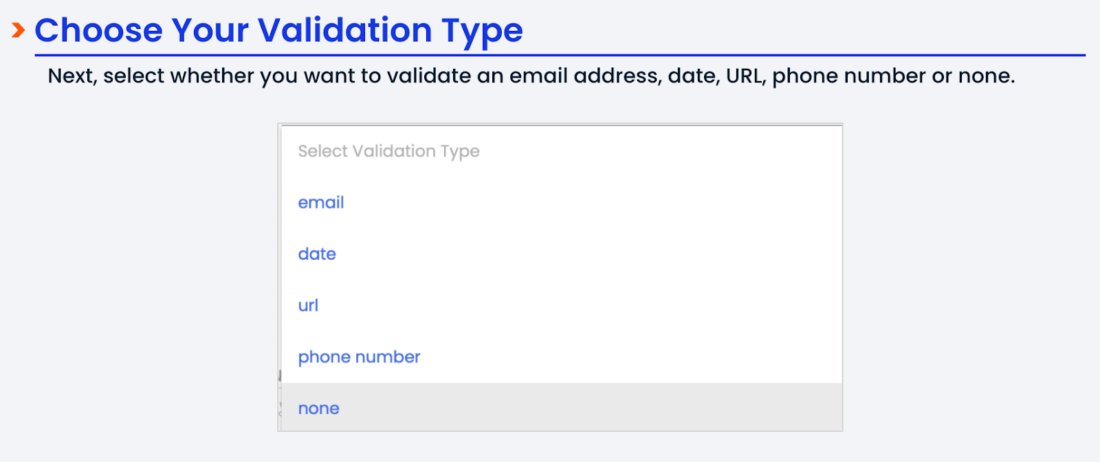
The simplicity of this format makes it particularly powerful in:
- Screening and eligibility determination
- Compliance confirmations
- Knowledge verification
- Workflow checkpoints
- Branching logic within automated assessments
Well-constructed closed-ended questions help standardize responses and improve comparability across participants. Dichotomous questions are among the most standardized formats available.
Common Types of Dichotomous Questions
Although the structure is consistent with just two options, the application of dichotomous questions can vary widely depending on context. Below are a few common types of these questions, and scenarios where they work best.
Yes/No Questions
Yes/No questions are the most recognizable and widely used dichotomous format. They are especially effective for confirmation or eligibility checks.
For example, a healthcare intake form might ask, “Do you have any known allergies?” The goal is not nuance, but identification.
These questions work best for:
- Eligibility checks
- Confirmation of actions
- Readiness assessments
They are clear, direct, and with very little interpretation needed.
True/False Questions
True/false questions are common in knowledge-based assessments. They test factual understanding and are often used in training or certification programs.
For example: “Client data must be encrypted before transmission. True or False?” The clarity of the format allows for objective scoring.
Clarity with these questions is essential, as ambiguous wording can undermine reliability.
Agree/Disagree Statements
Agree/Disagree statements are often used in feedback or alignment surveys. These questions measure acknowledgment or general agreement rather than factual knowledge. However, they should be used carefully.
For example: “I understand the company’s data privacy policy. (Agree/Disagree)”
This format is useful in feedback or perception surveys, but if you need more nuance, consider scale-based alternatives like Likert scales.
In all formats, the key is precision.
4 Dichotomous Question Examples
To fully understand their value, it helps to see dichotomous question examples in practical settings. Below, we’ll take a look at four different examples across various industries and scenarios.
Example 1: Screening or Qualification
Scenario: Employee onboarding assessment
“Are you legally authorized to work in this country? (Yes/No)”
This question quickly determines eligibility before proceeding.
Example 2: Knowledge Verification
Scenario: Compliance training
“Employees must report suspected data breaches within 24 hours. (True/False)”
This checks factual understanding, and reinforces policy knowledge while enabling automated scoring.
Example 3: Behavior or Experience Check
Scenario: Workplace safety evaluation
“Have you operated heavy machinery in the past 12 months? (Yes/No)”
This confirms prior experience without requiring elaboration.
Example 4: Process or Workflow Confirmation
Scenario: Project management system
“Has the final review been completed? (Yes/No)”
In platforms like Agolix®, a “Yes” could trigger automated approval workflows, while “No” routes the task back for revision.
Within Agolix®-based assessments, binary responses can integrate directly into logic paths. For example, selecting “No” on a prerequisite question can automatically redirect a participant to required training materials before proceeding.
How to Formulate a Dichotomous Question With Accompanying Instruction
Clarity doesn’t happen by accident. If you want accurate responses, you must formulate a dichotomous question with accompanying instruction.
Instructions eliminate guesswork and improve consistency.
Step 1: Define the Single Idea You Are Measuring
When creating dichotomous questions, the way you phrase the question and provide instructions can significantly affect accuracy.
When you formulate a dichotomous question with accompanying instruction, your goal is to eliminate interpretation gaps. Each question should measure one single concept. Combining multiple ideas into one binary question creates confusion and unreliable data.
For instance, asking, “Have you completed the training and reviewed the safety manual?” forces respondents into an impossible position if they completed one but not the other. Splitting these into separate questions preserves clarity.
Step 2: Write Clear, Neutral Question Language
Neutral language is equally important, as leading phrasing can cause biased responses.
A question like “You agree the new policy improves efficiency, correct?” subtly pressures respondents toward agreement. A better approach would be: “Do you believe the new policy improves efficiency? Yes or No.”
Avoid leading or emotionally loaded wording, and keep language direct and specific.
Step 3: Specify Response Instructions Clearly
Accompanying instructions further strengthen accuracy and eliminate interpretation gaps.
Instead of assuming shared understanding, clarify timeframes or conditions.
For example: “Select ‘Yes’ if you have completed cybersecurity training within the past 12 months. Select ‘No’ if you have not.”
Step 4: Confirm Logical Opposites
Finally, confirm that your response options represent true logical opposites. If respondents could reasonably answer “sometimes” or “partially,” the question might need a scaled or open-ended format instead.
Best Practices for Using Dichotomous Questions
Dichotomous questions are most effective when used intentionally. They excel in situations where clarity outweighs nuance. However, overuse can oversimplify complex topics.
A balanced assessment strategy often combines binary questions with scaled or open-ended formats. For example, a compliance check might confirm completion with a yes/no question, followed by an open-ended prompt asking about challenges faced during training.
Testing your questions before full deployment is another essential step.
Here are some best practices for using dichotomous questions:
- Use them for verification, screening, or compliance checks
- Avoid oversimplifying complex opinions
- Combine them with open-ended or scaled questions when deeper insight is needed
- Pilot test to ensure consistent interpretation
- Keep instructions concise and visible
When Dichotomous Questions Work Best
There are specific scenarios where dichotomous questions truly shine.
Because the data is binary, it integrates seamlessly with dashboards, analytics tools, and reporting systems. Organizations can instantly calculate completion rates, eligibility percentages, or pass/fail outcomes.
Early Screening and Intake
In early screening and intake processes, they establish baseline information quickly.
They are perfect for collecting baseline data or confirming prerequisites.
Compliance and Completion Checks
During compliance checks, they confirm whether required actions have been completed. This can be anything from tasks, training, or other requirements.
Decision-Based Assessments
In decision-based assessments, they act as triggers for branching logic and workflow automation.
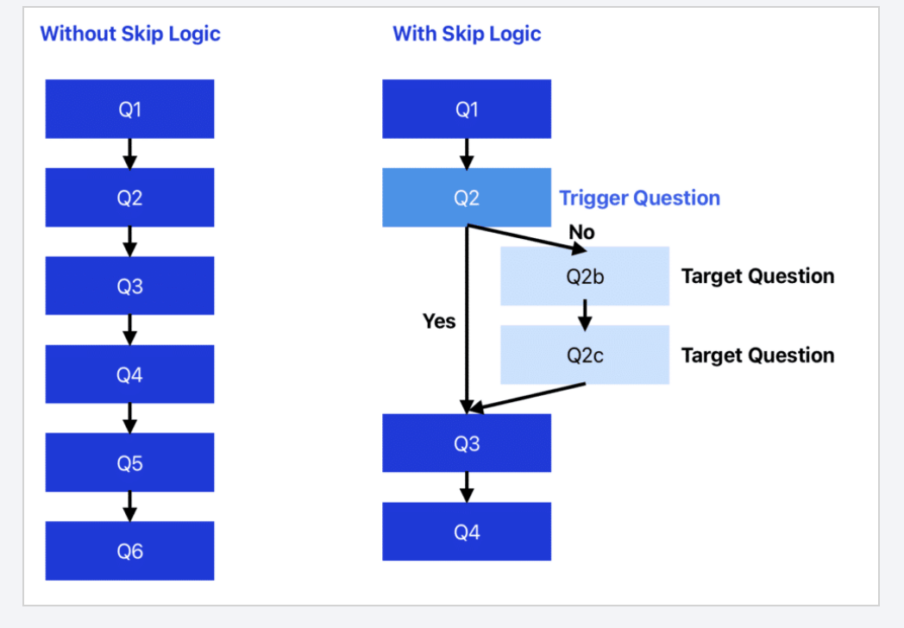
Binary responses can trigger:
- Branching logic
- Follow-up actions
- Automated approvals
- Escalation workflows
This makes them especially effective in automation-driven systems like Agolix®.
4 Common Mistakes to Avoid With Dichotomous Questions
Even simple questions can fail if poorly designed. Below are some common mistakes to avoid when creating and utilizing dichotomous questions.
1. Asking for Nuance
Asking binary questions about topics that require nuance is not helpful. If the topic requires an explanation, a binary option may lead you away from the actual answer.
2. Using Vague Language
Vague, subjective language can lead to inconsistent responses. Terms like “regularly” or “often” can create confusion.
3. Overloading With Binary Questions
Another common mistake is overwhelming an assessment with too many yes/no questions. While efficient, too many binary question formats can make assessments feel mechanical and reduce engagement.
4. Failing to Provide Context
Context also matters. Without clear instructions, respondents may interpret criteria differently, undermining the reliability of results.
Using Dichotomous Questions in Automated Assessments
Automation is where dichotomous questions truly demonstrate their strength. Because responses are limited to two options, they are easy to score, categorize, and integrate into logic rules.
In automated platforms, dichotomous questions are powerful because they:
- Simplify scoring
- Enable instant reporting
- Trigger workflows
- Support analytics dashboards
Binary data integrates cleanly with dashboards and reporting tools. It’s easy to visualize pass/fail rates, compliance percentages, or eligibility metrics.
In an Agolix® workflow, a “Yes” might trigger certification approval, while a “No” assigns a remediation module. Binary responses can activate email notifications, escalate approvals, or unlock subsequent assessment sections.
In systems that prioritize efficiency and clarity, binary question formats are not just convenient, but strategic.
Keep It Simple, Clear, and Intentional
At first glance, dichotomous questions may appear basic. However, their impact in structured assessment environments can be huge. They create clear decision points, reduce ambiguity, and support automation-driven workflows.
The key is thoughtful design. Ask yourself:
- Does this require nuance?
- Am I measuring only one idea?
- Are my instructions clear?
If the answer is yes, you’re on the right track.
Whether you’re designing onboarding assessments, compliance checks, or workflow confirmations, dichotomous questions can dramatically improve clarity and efficiency, especially when built into a platform like Agolix®.
Improve Efficiency with Dichotomous Questions
Dichotomous questions are simple by design, but strategic in impact. From eligibility screening to automated workflow triggers, they help organizations gather clear, actionable data.
Used wisely, they keep things clean, consistent, and efficient, which is exactly what you need in your business! Dichotomous questions help organizations collect reliable data, streamline operations, and improve respondent experience.
In digital platforms like Agolix®, they become foundational building blocks for smart, automated, and efficient evaluation systems.
Get started with Agolix® here today, and create your own dichotomous questions!