



What if you could not only receive feedback from clients, but actionable insights?
If you’re an HR leader trying to boost employee engagement, a coach guiding clients toward breakthroughs, or a business rolling out a new product, one thing’s clear: you need to collect feedback. But here’s the twist, not all feedback tools are created equal.
Many organizations use the terms surveys and assessments interchangeably, assuming both serve the same function. Spoiler alert: they don’t! While both collect information, the purpose, structure, and outcomes of surveys and assessments are entirely different. And when you choose the wrong tool, you end up with missed opportunities and wasted time.
In this post, we’re diving deep into the difference between assessments and surveys, uncovering the unique role each plays, and showing you how platforms like Agolix empower you to use both more effectively.
The Difference Between Assessments and Surveys
Surveys and assessments are often tossed around like interchangeable tools, but in practice they serve very different purposes. Understanding those differences is essential if you want to move beyond generic feedback and start making strategic, data-driven decisions.
While both involve asking questions and gathering responses, the intent behind each tool sets them apart.
Let’s break them down to understand when and why you’d use each.
What is a Survey?
Surveys are designed to gather opinions, preferences, or experiences from a group. Think of them as your method for understanding what people think or feel. They’re often used to capture broad sentiment, identify trends, or gather customer feedback. The results? They’re typically descriptive, helping you see patterns or measure satisfaction.
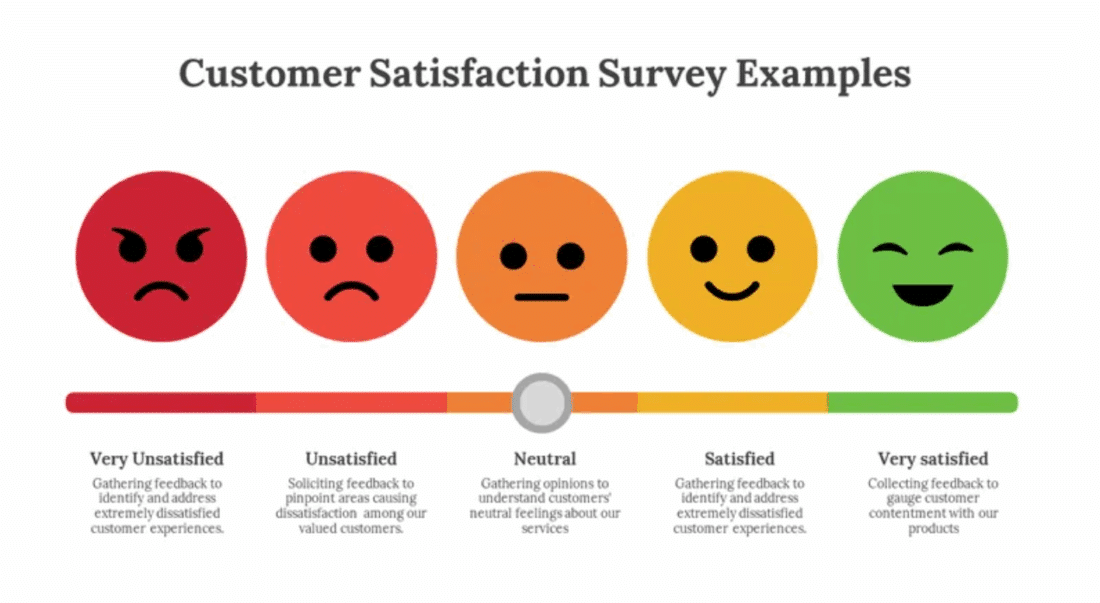
They usually include structured questions like:
- Likert scales (“Rate your satisfaction from 1–10”)
- Multiple choice
- Open-ended responses
Surveys are best described as listening tools. They don’t tell you what to do next, but they reveal how your audience is experiencing something in the moment.
Benefits and Purpose of Surveys
Surveys are often the go-to tool when speed, simplicity, and scalability matter most. They’re great for capturing large-scale sentiment, like customer satisfaction or employee morale.
Surveys are also ideal for collecting benchmark data. Many HR teams rely on regular pulse surveys to track engagement, using them as early warning systems for burnout, disengagement, or cultural shifts.
They’re also cost-effective and easy to distribute. And with tools like Agolix, building one takes minutes, not days. But while surveys excel at capturing feedback, they often fall short in driving action. They tell you what’s happening, but not always why, or what to do next.
That’s where assessments come in.
What is an Assessment?
An assessment is built to measure knowledge, skills, behavior, or growth. They’re diagnostic in nature, designed not just to capture information, but to interpret and prescribe next steps. If surveys describe, assessments diagnose.
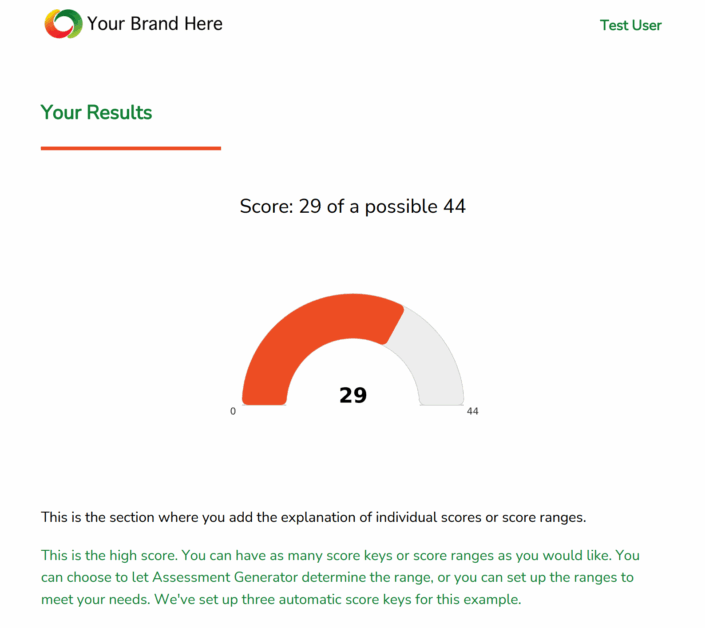
Think of surveys as your listening tool, and assessments as your decision-making tool.
Imagine running a product feedback survey after a launch. You’ll learn what users liked and what they didn’t, which is valuable. However, if you’re coaching a team through a change initiative, you’ll want to know how ready they are, where they struggle, and what development path to offer. That’s where an assessment comes in.
Tools like Agolix shine here, combining the wide net of survey collection with the depth of diagnostic assessment offerings to give organizations the full picture.
Benefits and Purpose of Assesments
Unlike surveys, assessments dig deeper. They’re built not just to collect responses, but to evaluate them against benchmarks, standards, or developmental goals.
In organizational settings, assessments support everything from onboarding and skills development to team alignment and performance evaluations.
Take a leadership skills assessment, for example. It doesn’t just ask leaders how they feel; it evaluates their ability to delegate, handle conflict, and adapt during uncertainty. These insights don’t just sit in a report- they inform coaching conversations, training plans, and business strategy.
Tools like Agolix’s 360° Assessments make it even easier by automating the collection, feedback, and follow-up, giving teams real-time feedback that’s meaningful and actionable.
When to Use a Survey
Surveys are the go-to when you need fast, wide-reaching insights.
Let’s say your organization just wrapped up a virtual event. A post-event survey can tell you how attendees felt about the experience, what worked well, and what could be improved. It gives you a snapshot of collective perception, fast.
Another example could be you recently launched a new onboarding process. Now, you want to know how people experienced it. A survey gives you a fast, cost-effective way to gather perceptions from a large group. You’re not trying to diagnose someone’s development or track their long-term progress; you simply want their input.
Surveys are especially effective for:
- Feedback collection after events or interactions
- Measuring satisfaction among customers or employees
- Tracking general sentiment toward a product or initiative
- Informing future strategy based on crowd-sourced opinion
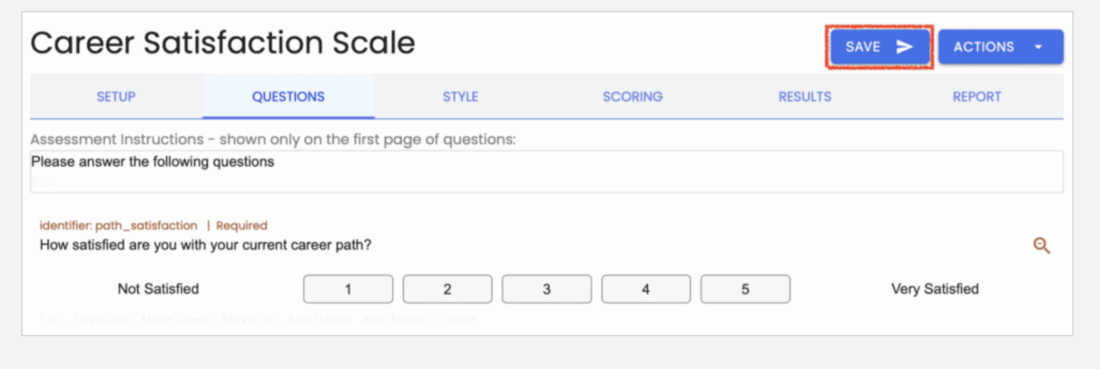
In short, use a survey when you’re looking for broad input, quick data, and general trends.
They’re best suited for:
- Marketing and customer research teams trying to understand their audience
- HR departments looking to improve employee experience
- Product teams collecting feedback on new features
When to Use an Assessment
Unlike surveys, assessments are about measuring performance and prescribing action.
If you’re a coach helping a leader grow, a well-designed assessment can measure their confidence, clarity, communication skills, or readiness to lead through change. Over time, repeated assessments can track progress, highlight growth, and identify areas that need more attention.
Imagine you’re coaching a team leader through a development program. You don’t just want to know if they “feel confident”; you want to assess how they actually handle conflict, prioritize tasks, and communicate. That’s where assessments come in.
Assessments are ideal when you need:
- Measurable, individualized data about a person’s performance, mindset, or skill set
- To evaluate the impact of a program or development initiative
- To track progress over time, not just collect a one-time opinion
They’re especially powerful for:
- Leadership coaching and development programs
- Employee skill gap analyses
- Pre- and post-training evaluations
- Behavioral assessments to understand readiness for change
What makes assessments even more valuable is their ability to point out blind spots, strengths, and areas for improvement. They move beyond the “what do you think?” and ask “what can we change?”
Platforms like Agolix make this process seamless by offering automated assessments, easy-to-understand results, and customizable frameworks that fit your team’s unique needs.
Once a respondent submits an assessment, Agolix automatically calculates score(s) based on how the respondent answered the questions. As the author of the assessment, you get to decide how your assessment is scored. You can choose to calculate an overall score or scores for each type (or category) you define. You can also enter feedback that is provided automatically based on each respondent’s results.

So, if your goal is to support individual or organizational growth, and not just gather opinions, an assessment is your best bet.
Real-World Examples of Surveys in Action
Let’s bring all of this to life with some real-world use cases.
Imagine a software company that just wrapped up a virtual product launch for a new feature. To capture immediate feedback, the team sends out a post-event survey to attendees. One of the key questions reads: “On a scale of 1–10, how satisfied are you with the event overall?”
The responses help the team understand how the event was received: what worked, what didn’t, and whether the content resonated with the audience. The feedback is broad but valuable, especially when you’re trying to improve future events. You’re getting a sense of general sentiment, which is perfect for guiding event planning, tone, and messaging.
Here’s another example: A marketing team is preparing to revamp their brand messaging. They launch a market research survey to collect customer preferences and insights.
Questions like: “Which of the following features is most important to you?” or “What made you choose our product over a competitor?” give them clear, scalable input from hundreds of users. The responses shape campaign strategies and product positioning moving forward.
Curious about survey use in the workplace? HR might run an employee engagement survey and find that only 60% of employees feel motivated. That’s an important signal and reveals a problem, but it doesn’t yet explain it.
These scenarios highlight what surveys do best: gather broad perceptions, uncover trends, and inform strategic pivots based on group sentiment. They’re not designed to diagnose or guide individual development, but they can point you in the right direction.
Real-World Examples of Assessments in Action
Now, let’s flip to the assessment side of feedback.
Imagine a business coach onboarding a new executive client. Instead of asking how satisfied they are with their career (as a survey might), the coach starts with a leadership readiness assessment that includes the question: “How confident do you feel navigating your team through periods of uncertainty?”
This question provides insight into mindset, skill gaps, and development areas. The coach now has a roadmap for building a personalized growth plan. This isn’t just about collecting feedback; it’s about creating measurable, forward-moving progress.
Another example is a company that recently restructured its leadership team. A few months in, they’re noticing friction between departments. Rather than guess the root cause, they roll out a team alignment assessment. It explores topics like collaboration, trust, communication clarity, and decision-making. The results point to a consistent pain point: unclear role responsibilities leading to duplicated efforts.
Finally, let’s revisit that earlier HR team. After discovering low employee engagement via a survey, they follow up with an engagement assessment that digs into drivers of disengagement: autonomy, recognition, leadership, and workload balance. The results reveal that many employees feel disconnected due to inconsistent communication from management. With this data, leadership now has a clear area to address and track.
These scenarios show how assessments move you from “We know something’s wrong” to “Here’s what we need to do to fix it.” They allow for individualized insights, prescriptive action, and ongoing development tracking; things a survey alone can’t provide.
Which One Is Best for You?
Here’s the million-dollar question: survey or assessment?
Well, it all depends on what you’re trying to achieve.
If you want to know what people think, offer a survey. If you want to understand how people are growing, offer an assessment.
Use a Survey When You Want To:
- Capture opinions, preferences, or satisfaction levels
- Gather broad insights from a large group quickly
- Identify trends or general sentiment across teams or customers
- Inform strategic decisions in HR, product, or marketing
- Run low-effort, scalable feedback loops (e.g., NPS or post-event surveys)
Use an Assessment When You Need To:
- Measure skills, behavior, or readiness for change or leadership
- Provide personalized, diagnostic feedback to individuals or teams
- Track progress over time with measurable outcomes
- Guide coaching, development, or performance improvement plans
- Move beyond opinions to prescribe actionable next steps
But here’s the kicker: you don’t always have to choose just one.
In fact, the most insightful organizations use both tools in tandem. For example:
- A survey might show that only 50% of employees feel aligned with company goals.
- An assessment can uncover which specific behaviors or communication breakdowns are causing that misalignment.
Using both gives you the macro and micro view; big picture sentiment and specific performance data. Together, they provide the insight, direction, and action plan you need to move forward confidently.
So, the next time you’re faced with gathering feedback, don’t just ask what people think. Ask what they need to improve, evolve, and succeed!
Enhance Performance with Agolix 360° Assessments
If you’re ready to go beyond generic surveys and one-size-fits-all feedback, Agolix 360° Assessments might be exactly what you need.
These assessments take feedback to a whole new level by combining the simplicity of surveys with the depth and diagnostic power of assessments, all in one platform.
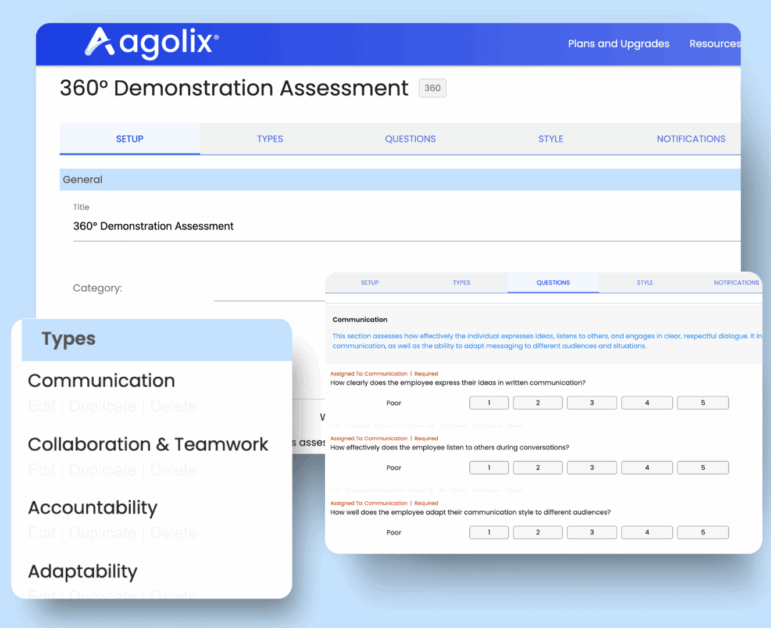
Here’s what makes them stand out:
- Multi-source feedback: Gather insights from peers, supervisors, direct reports, and self-assessments to get a well-rounded view of performance.
- Automated reporting: Say goodbye to spreadsheets. Agolix handles delivery, reminders, scoring, and report generation—all automated.
- Actionable insights: The results aren’t just interesting—they’re useful. You’ll know exactly what to address and where to focus.
- Customizable frameworks: Tailor assessments to match your leadership principles, cultural values, or team objectives.
Whether you’re coaching high-potential talent, running leadership development programs, or aligning teams post-restructure, Agolix helps you turn feedback into progress.
Turn Feedback into Forward Momentum
At the end of the day, both surveys and assessments have their place in your toolkit. However, understanding when and how to use each is what separates feedback collection from gathering truly strategic insights.
Used together, surveys and assessments create a full-circle feedback system; one that not only listens but guides, measures, and improves.
With Agolix Professional, you can unlock everything you need to build smarter surveys, deploy powerful assessments, and generate automated insights that actually drive results. Don’t just gather data. Build assessments that inspire growth, not fatigue. Get started here today!