



Only about 1 in 7 high performers is actually a high-potential employee with the capacity to take on significantly larger roles. Finding tomorrow’s leaders shouldn’t take six months, yet many organizations still rely on annual talent reviews, lengthy meetings, and subjective manager nominations to identify high-potential employees. The result is a slow process that can overlook emerging talent while competitors move faster to recruit and develop it.
Structured assessments offer a faster, more objective approach. By replacing guesswork with standardized data, HR teams can identify high potential employees in weeks instead of quarters, reducing bias while accelerating leadership development. Below, you’ll learn how assessments streamline the identification process, which assessment tools are most effective, and how to build a scalable strategy for developing and retaining your future leaders.
What Are High-Potential Employees?
Every organization has employees who consistently exceed expectations. They deliver strong results, earn positive performance reviews, and become the people managers depend on. But here’s the catch: not every high performer is a high-potential employee.
High-potential employees (HiPOs) are individuals who excel in their current roles while also demonstrating the ability to take on significantly larger responsibilities in the future. They’re typically considered the top 3-5% of the workforce not simply because of what they’ve accomplished today, but because of how quickly they learn, adapt, and grow.
One of the biggest misconceptions in talent management is assuming that high performance automatically equals high potential. While high performers excel in their current responsibilities, high-potential employees possess the capacity to learn quickly, lead others, and thrive in unfamiliar situations.
Some of the most common characteristics of high potential employees include:
- Learning agility
- Strong leadership behaviors
- Emotional intelligence
- High motivation and ambition
- Adaptability
- Resilience under pressure
- Strong engagement and commitment
- Curiosity and continuous learning
That’s why identifying high potential employees requires looking beyond annual performance reviews. To build a strong leadership pipeline, HR teams need objective ways to evaluate both current performance and future capability.
Why Traditional HiPO Identification Is Too Slow
Imagine it’s time for your organization’s annual talent review.
Managers spend weeks preparing nomination lists. Department leaders meet to debate candidates, and HR schedules calibration sessions to compare employees across teams. Then, executives review the recommendations before approving the final leadership cohort. By the time everyone agrees, three to six months may have passed!
The process is familiar, but it’s also one of the biggest obstacles to identifying high-potential employees quickly.
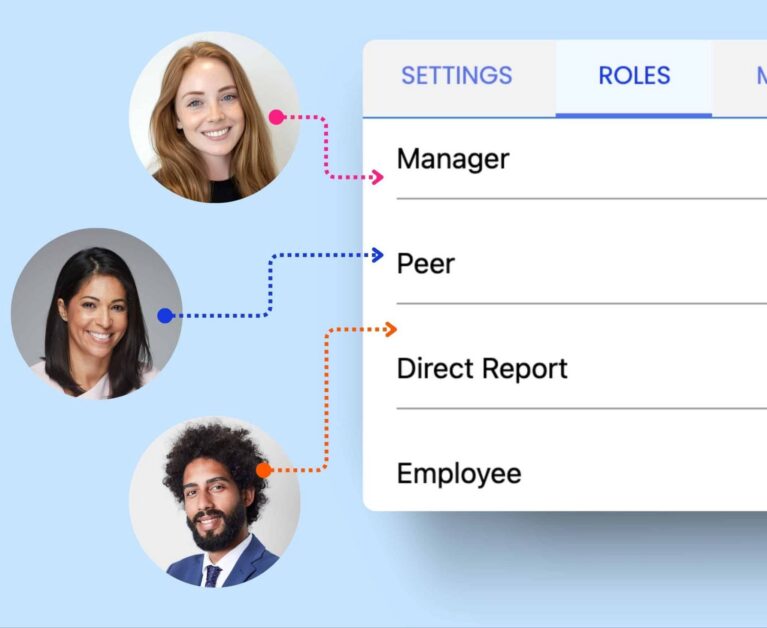
First, it relies heavily on manager visibility. Employees who work closely with senior leaders are more likely to be nominated, while equally capable individuals in less visible roles can easily be overlooked. Good intentions don’t eliminate unconscious bias, and subjective nominations often reward visibility as much as potential.
Second, the data quickly becomes outdated. Employee aspirations, engagement, and career goals can change in just a few months. By the time the final list is approved, HR may be making decisions based on information that’s no longer current.
Finally, there’s the opportunity cost. High-potential employees don’t stop exploring career opportunities while committees deliberate. Employees who feel overlooked are often the first to respond to recruiters, or begin searching for roles where their potential will be recognized.
In other words, speed isn’t just about making HR processes more efficient. It’s a real competitive advantage for retaining future leaders.
3 Ways Assessments Speed Up Identifying High-Potential Employees
The fastest organizations don’t simply make talent reviews more efficient; they rethink the entire process.
Leading HR teams skip the one-conversation-at-a-time approach entirely. Structured assessments let them collect consistent data from an entire department simultaneously. What once required months of meetings can now be completed in a matter of days.
Effective high-potential assessments typically measure three critical dimensions:
1. Aspiration
Aspiration answers an important question: Does this employee actually want greater responsibility? Career ambitions, interest in leadership opportunities, and willingness to take on stretch assignments all provide valuable signals.
2. Ability
Ability focuses on whether an employee has the competencies needed to succeed in a larger role. Leadership capability, critical thinking, decision-making, and problem-solving skills help predict future success, not just current performance.
3. Engagement
Engagement examines whether employees are likely to stay and invest in a future with your organization. High-potential employees who are disengaged or actively considering other opportunities represent one of the biggest succession planning risks.
Modern assessment platforms like Agolix make this process even faster by automating assessment delivery, scoring responses instantly, benchmarking candidates against leadership competencies, and generating side-by-side comparisons that help HR teams make informed decisions quickly.
Consider a 500-person organization building its next leadership cohort. Using a traditional nomination process, managers might spend two months submitting nominations, another month participating in calibration meetings, and several more weeks waiting for executive approval.
By contrast, an assessment-first approach can evaluate the same employee population in about three weeks, giving HR the insights needed to begin developing future leaders months sooner.
5 Types of Assessments & Tools to Identify High Potential Employees
No single assessment can tell you everything about an employee’s leadership potential. Future leaders aren’t defined by one trait, but rather a combination of skills, motivation, judgment, and the ability to grow. That’s why the most effective HR teams use several assessment types, each providing a different piece of the puzzle.
Different assessments measure different dimensions of potential. The most effective strategy combines several assessment types throughout the identification process. Here are a few to utilize for identifying high potential employees:
1. Competency and Skills Assessments
The best place to start is with competency and skills assessments. These assessments measure how well employees demonstrate the knowledge, behaviors, and capabilities required for future leadership roles.
For example, if your organization values strategic thinking, collaboration, and effective communication in managers, competency assessments can evaluate employees against those specific criteria. They provide an objective first filter, helping HR quickly identify individuals who already possess many of the building blocks for leadership.
Because these assessments can be distributed and scored automatically, they eliminate hours of manual interviews and provide consistent results across large employee groups.
Best used:
- Initial screening
Measures:
- Leadership competencies
- Communication
- Strategic thinking
- Problem-solving
2. Cognitive Ability and Learning Agility Tests
Leadership often means navigating unfamiliar challenges, making decisions with incomplete information, and learning quickly as responsibilities expand. That’s why cognitive ability and learning agility assessments are valuable early in the identification process.
Rather than measuring what employees already know, these assessments evaluate how they think. They can reveal critical thinking, analytical reasoning, problem-solving ability, and the capacity to adapt to new situations—all qualities that help predict success in larger or more complex roles.
For HR teams, these assessments make it easier to distinguish employees who have the potential to grow rapidly from those who excel in familiar environments.
Best used:
- Early assessment stage
Measures:
- Critical thinking
- Analytical reasoning
- Learning speed
- Adaptability
3. Personality and Psychometric Assessments
Performance reviews rarely tell the whole story. An employee may consistently meet goals but have very different motivations, communication styles, or leadership tendencies than another equally successful colleague.
Personality and psychometric assessments help uncover these less visible qualities. They provide insight into characteristics such as resilience, emotional intelligence, motivation, and leadership style. These are specific factors that often influence long-term leadership success.
These assessments are particularly valuable once you’ve narrowed your candidate pool, adding context that traditional performance metrics simply can’t provide.
Best used:
- Shortlisted candidates
Measures:
- Motivation
- Resilience
- Emotional intelligence
- Leadership disposition
4. Situational Judgment Tests (SJTs)
Leadership isn’t just about what employees know; it’s about how they respond when faced with difficult decisions.
Situational Judgment Tests (SJTs) place employees in realistic workplace scenarios, and ask them to choose how they would respond. Whether it’s resolving team conflict, managing competing priorities, or making ethical decisions under pressure, SJTs provide a practical view of an employee’s judgment.
Because every candidate responds to the same scenarios, SJTs also create a more standardized and objective evaluation process, reducing the influence of interviewer bias.
Best used:
- Mid-stage evaluations
Measures:
- Leadership judgment
- Ethical decision-making
- Conflict resolution
5. 360-Degree Feedback
By the final stages of the process, it’s important to validate what the assessment data suggests. That’s where 360-degree feedback adds tremendous value.
Leadership potential should be visible to more than just a direct manager. Feedback from peers, direct reports, project teammates, and other stakeholders helps confirm whether an employee consistently demonstrates leadership behaviors across different situations.
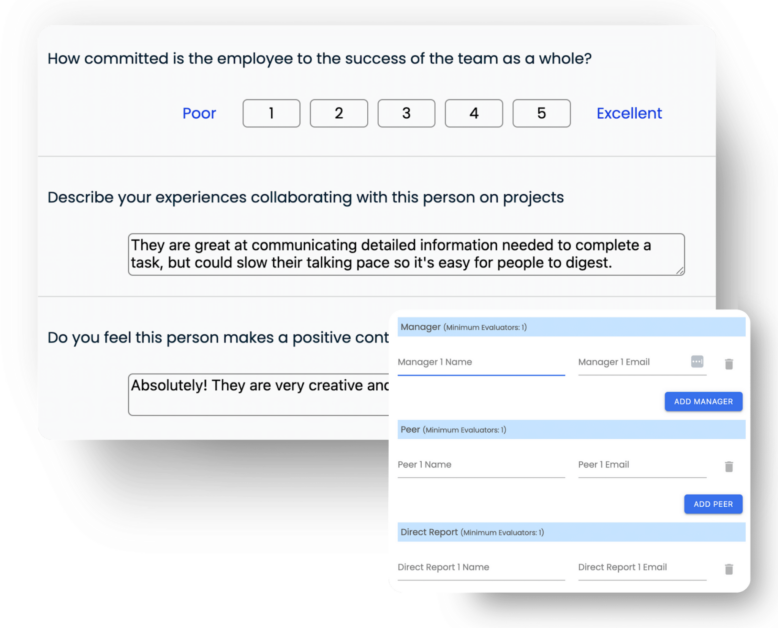
Collecting multiple perspectives simultaneously provides a richer, more balanced picture of each candidate, while avoiding the need for numerous individual interviews.
Best used:
- Final validation stage
Measures:
- Peer relationships
- Leadership influence
- Collaboration
- Communication
Recommended Assessment Sequence
The most effective approach isn’t to administer every assessment at once. Instead, use each tool strategically as employees move through the identification process.
Begin with competency and skills assessments to evaluate your broader talent pool. Next, use cognitive ability and learning agility assessments to identify employees who can grow into larger roles.
For the strongest candidates, add personality and psychometric assessments to understand leadership style and motivation, followed by situational judgment tests to evaluate real-world decision-making.
Finally, use 360-degree feedback to validate your findings before making development or succession planning decisions.
This layered approach allows HR teams to assess large populations efficiently, and make faster, evidence-based decisions about who should enter the organization’s high-potential development pipeline.
A 4-Step Process to Identify High Potential Employees Faster
Identifying high potential employees doesn’t have to be a lengthy exercise. By combining structured assessments with a clear process, HR teams can build a more objective talent pipeline, reduce bias, and move promising employees into development much sooner.
Here’s a practical four-step framework your organization can implement.
Step 1: Define What Potential Means
Before you can identify high-potential employees, you need to define what “high potential” actually looks like in your organization. Too often, companies rely on broad leadership traits or vague impressions, leading managers to nominate employees based on personal opinions rather than objective criteria.
Instead, start by identifying the competencies your future leaders will need to succeed. Think beyond today’s job requirements and focus on the skills, behaviors, and capabilities that align with your organization’s long-term strategy. These might include strategic thinking, change leadership, emotional intelligence, or the ability to lead cross-functional teams.
It’s also important to be selective. Most organizations identify only about 3-5% of their workforce as high-potential employees. Expanding the pool too broadly can dilute professional development resources and make succession planning less effective.
Step 2: Cast a Wide, Objective Net
Once you’ve established clear criteria, resist the temptation to rely solely on manager nominations. While managers provide valuable insights, they don’t always have visibility into every promising employee, and unconscious bias can influence who gets recognized.
A more effective approach is to assess a broader group of employees using standardized assessments. By giving more people the opportunity to demonstrate their potential, HR teams are more likely to uncover hidden talent that might otherwise go unnoticed. This broader, data-driven approach also supports diversity, equity, and inclusion efforts by creating a more consistent and objective evaluation process.
Step 3: Combine Assessment Results with Performance Data
Assessments are powerful, but they work best when paired with existing performance data.
Think of performance as the first qualifier, telling you who is consistently delivering results today. Assessments add the missing piece by revealing who has the capacity to grow into more complex leadership roles tomorrow. Together, these data points provide a far more complete picture than either could on its own.
The strategic question isn’t ‘Who’s our top performer?’ It’s ‘Who is performing well today and has the greatest potential to lead tomorrow?
Step 4: Move Immediately into Development
The biggest mistake organizations make is treating assessments as the finish line. In reality, identifying high-potential employees is only the beginning.
Rather than conducting another round of evaluations, HR teams can use assessment results to pinpoint strengths, identify skill gaps, and recommend targeted growth opportunities. These may include:
- Stretch assignments
- Leadership projects
- Executive mentoring
- Coaching for high potential employees
- Cross-functional experiences
Finally, remember that high-potential status isn’t permanent. Employees develop, priorities shift, and business needs evolve. Reassessing employees annually helps ensure your talent pipeline stays current, and that development plans continue to reflect each employee’s growth and future potential.
From Identifying to Retaining and Coaching High-Potential Employees
Identifying high-potential employees is only half the challenge. What an organization does next often determines whether those employees become future leaders, or future hires for a competitor.
The sooner employees are recognized for their potential, the sooner they can begin developing the skills needed for larger roles. Waiting months to identify future leaders doesn’t just delay development; it increases the risk that talented employees will disengage or leave before they ever have the opportunity to grow within your organization.
That’s why assessments shouldn’t be viewed as a one-time selection tool. They should serve as the foundation for an ongoing development strategy. The same assessment data that helps HR identify high-potential employees can also guide personalized coaching and career development. Managers don’t have to start from scratch. Assessment insights already show each employee’s strengths, surface development opportunities, and point toward growth plans tailored to their future leadership goals.
For example, an employee who demonstrates strong strategic thinking but lower confidence in leading others might benefit from executive coaching, cross-functional leadership projects, or mentoring from an experienced people leader. Another employee with exceptional emotional intelligence but limited business experience could be given stretch assignments that broaden their organizational perspective.
Because development is driven by objective assessment data, employees receive targeted opportunities that address their unique needs, rather than following a one-size-fits-all leadership program.
To retain high potential employees, organizations should also make the path forward visible. Clearly communicating participation in leadership programs, pairing employees with mentors, and regularly discussing career goals all reinforce that the organization is invested in their future. Employees who can see a clear path for growth are far more likely to remain engaged and committed.
Choosing Assessment Software for HiPO Identification
Even the best assessment strategy can fall short if it’s supported by the wrong technology. If HR teams still have to manually distribute assessments, compile spreadsheets, and compare results across dozens of employees, they’re just replacing one slow process with another.
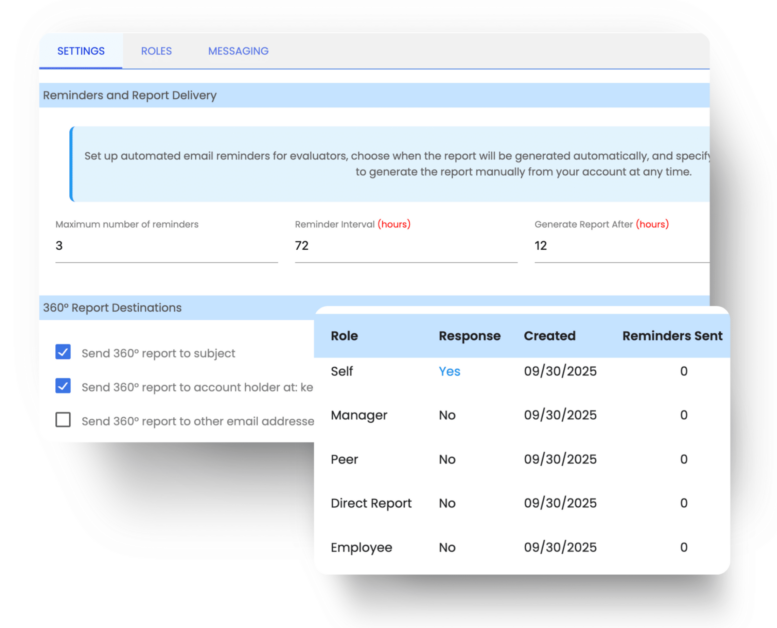
The right assessment platform should streamline the entire identification process, from delivering assessments and scoring responses to comparing candidates and generating actionable insights. HR teams shouldn’t need weeks of coordinating talent reviews to identify promising employees—the right platform gets them there quickly and confidently, using consistent, data-driven results.
As you evaluate assessment software, look for a solution that offers:
- Customizable assessments mapped to organizational competencies
- Automated scoring and reporting
- Easy large-scale distribution
- Mobile-friendly participant experience
- Real-time analytics
- Flexible workflows
- Actionable development insights
- Secure data management
The ultimate goal isn’t simply to identify high-potential employees faster, but move seamlessly from identification to development. The best assessment platforms don’t stop at producing scores; they give HR leaders the information they need to create personalized development plans, support succession planning, and make better talent decisions over time.
Build a Faster, Fairer Path to Leadership
Agolix was built with this workflow in mind. HR teams can create customized assessments tailored to their leadership competencies, automate distribution and scoring, and compare candidates through intuitive reporting dashboards.
Ready to modernize your HiPO identification process? Start your free trial today, or schedule an Agolix demo to see how customizable assessments can help your organization identify, develop, and retain high-potential employees faster.