


Every coach, consultant, and service provider knows the drill: scheduling discovery sessions, asking the same onboarding questions, digging for clarity, and trying to uncover what the client really needs before the actual work begins.
What if you could gather most of those insights without discovery sessions? That’s where assessments come in.
A well-designed assessment can uncover behavioral patterns, communication preferences, strengths, and blind spots in a fraction of the time, giving you a clear starting point before the conversation even begins.
In this article, you’ll learn how assessments can help you streamline discovery, improve client onboarding, and replace hours of repetitive information gathering with actionable insights.
What Is a Discovery Session?
A discovery session is an initial structured conversation between a coach, consultant, or service provider and a potential client.
The purpose is simple: understand the client’s needs before beginning the actual engagement.
Think of a discovery session as a diagnostic conversation. It helps uncover where the client is now, where they want to go, and what obstacles may be standing in the way.
Most discovery sessions explore topics like:
- Client goals and desired outcomes
- Current pain points and frustrations
- Communication and collaboration preferences
- Decision-making tendencies
- Expectations for success
- Timeline and readiness for change
Discovery sessions are commonly used by:
- Executive coaches
- Leadership consultants
- Business coaches
- Marketing agencies
- HR consultants
- Therapists and wellness professionals
- Fractional executives
Done well, discovery sessions can create clarity and alignment. But done poorly, they become repetitive conversations that drain time and delay meaningful progress.
Why Discovery Sessions Often Fall Short
There’s a reason many coaches feel stuck repeating the same onboarding conversations over and over again.
Traditional discovery sessions rely heavily on self-reporting, and people are not always great at objectively understanding themselves.
Clients Often Lack Full Self-Awareness
Many clients genuinely want to answer honestly, but they may not fully recognize their behavioral patterns, emotional triggers, or communication habits.
For example, a client may describe themselves as “collaborative,” while unknowingly avoiding conflict or dominating conversations. This creates incomplete or inaccurate onboarding data.
Research by organizational psychologist Tasha Eurich, featured in Harvard Business Review, found that while nearly all people believe they’re self-aware, far fewer actually are — making subjective discovery conversations less reliable than many professionals assume.
Clients Sometimes Say What They Think You Want to Hear
During discovery sessions, clients may unintentionally present an idealized version of themselves.
They may:
- Downplay challenges
- Avoid vulnerability
- Overstate readiness for change
- Give socially desirable answers
Without structured assessment data, it’s difficult to distinguish surface-level responses from their deeper behavioral patterns.
Discovery Sessions Can Become Unstructured
Even experienced professionals can struggle with consistency.
Without a repeatable framework, discovery session questions may vary widely between clients, making it difficult to benchmark insights or compare patterns over time.
This inconsistency can lead to:
- Missed warning signs
- Incomplete onboarding
- Reactive coaching plans
- Misaligned expectations
They Require Significant Time
Discovery sessions often stretch across multiple meetings before actionable work even begins.
That means:
- More scheduling
- More administrative overhead
- Longer onboarding timelines
- Delayed client transformation
For busy coaches and consultants, this creates a scalability problem.
What Are Assessments and How Do They Work?
Assessments are structured tools designed to measure specific traits, behaviors, motivations, strengths, or emotional tendencies.
Rather than relying entirely on conversational discovery, assessments gather data through guided questionnaires and scoring systems.
Popular assessment frameworks include:
How Assessments Work
The process is straightforward:
- The client completes a questionnaire
- Responses are analyzed and scored
- The assessment generates insights and patterns
- The coach reviews the results before the first session
This creates a much clearer picture of the client before any live conversation happens.
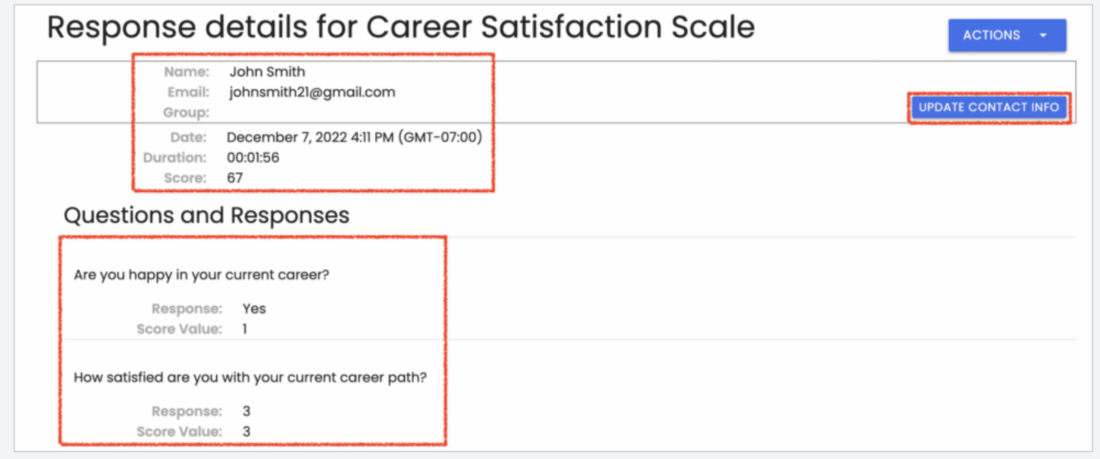
For example:
- DISC can reveal communication and conflict styles
- EQ assessments identify emotional intelligence patterns
- Strengths assessments uncover motivation drivers
- Values-based assessments clarify priorities and decision-making
Organizations like Gallup and The Myers-Briggs Company have demonstrated how structured assessments improve communication, leadership development, and team effectiveness.
Most importantly, assessments are not replacements for conversations; they’re accelerators of insight. They help coaches and clients get to meaningful discussions faster by uncovering important patterns before the first session begins.
Instead of spending sessions gathering baseline information, you begin with meaningful context already available.
How Assessments Replace (or Enhance) Discovery Sessions
Assessments don’t just make discovery sessions faster; they make them smarter. Instead of relying entirely on conversational guesswork, coaches and consultants can start with structured insights that reveal patterns clients may not even recognize themselves.
Here’s where assessments make the biggest difference.
1. Assessments Surface Blind Spots
One of the biggest challenges in a traditional discovery session is that clients can only share what they’re consciously aware of. Many people unintentionally overlook habits, emotional triggers, or communication patterns that are shaping their results.
Assessments help uncover patterns around:
- Stress responses
- Communication tendencies
- Leadership style
- Motivation drivers
- Emotional regulation
- Conflict behavior
For example, a leadership coach may work with a manager who describes themselves as “easygoing and collaborative.” But after completing a DISC assessment, the results reveal a strong tendency to avoid difficult conversations under pressure. That insight immediately changes the coaching direction from “improving collaboration” to “building confidence in conflict situations.”
Without the assessment, that pattern may have taken several discovery sessions to uncover.
2. They Provide Objective Data
Traditional discovery sessions are heavily influenced by perception and memory. Clients may unintentionally exaggerate strengths, minimize challenges, or describe situations differently depending on their mood or recent experiences.
Assessments create structured, repeatable data that can be revisited throughout the coaching relationship.
That means you can:
- Track progress over time
- Compare results across teams
- Identify recurring behavioral patterns
- Create measurable coaching outcomes
Imagine an executive coach working with multiple department leaders. Instead of relying on subjective observations alone, the coach uses assessment data to identify common stress-response patterns across the leadership team. Over time, they can measure whether communication and emotional intelligence scores improve after coaching interventions.
The result is a coaching process grounded in data, not assumptions.
3. Coaches Start Informed
Many discovery sessions begin with broad, introductory questions that consume valuable time:
- “Tell me about yourself.”
- “What are your biggest challenges?”
- “What kind of support are you looking for?”
Assessments eliminate much of that early-stage information gathering.
Instead of walking into session one cold, coaches already understand:
- Potential friction points
- Communication preferences
- Strength areas
- Emotional triggers
- Coaching opportunities
For example, a business consultant reviewing an assessment before the first meeting might notice that a client scores highly in innovation and strategic thinking but low in follow-through and delegation. Rather than spending the first session uncovering operational issues, the consultant can immediately focus on accountability systems and execution strategies.
That dramatically shortens onboarding and accelerates progress.
4. Assessments Create Shared Language
One overlooked benefit of assessments is that they give both the coach and client a common framework for discussion.
Without structure, coaching conversations can become vague:
- “I just feel stuck.”
- “Communication isn’t working.”
- “My team doesn’t understand me.”
Assessments replace ambiguity with clearer terminology and patterns. This improves communication, accountability, reflection, and coaching precision.
For instance, after completing an emotional intelligence assessment, a client may realize they consistently struggle with emotional regulation during high-pressure meetings. Instead of discussing stress in abstract terms, both coach and client now have a concrete concept they can revisit throughout the engagement.
That shared language makes coaching conversations more productive and actionable.
5. Assessments Save Time
Discovery sessions often stretch across multiple calls before meaningful coaching even begins. Scheduling alone can slow momentum and create friction in the onboarding process.
Assessments simplify this by allowing clients to complete discovery work asynchronously, on their own time.
That means:
- Fewer repetitive onboarding calls
- Less administrative back-and-forth
- Faster client onboarding
- More time spent on actual transformation
For example, a consultant who previously spent three separate discovery sessions gathering baseline information can now send a branded assessment through Agolix, an AI-powered assessment platform, before the first meeting. By the time the client shows up for session one, the consultant already has detailed insight into their goals, communication style, and challenges.
Instead of spending the first hour collecting information, they can immediately begin solving problems.
Discovery Session Questions You Can Answer with Assessments Instead
Many common discovery session questions can be answered more effectively through assessments.
Here are a few examples:
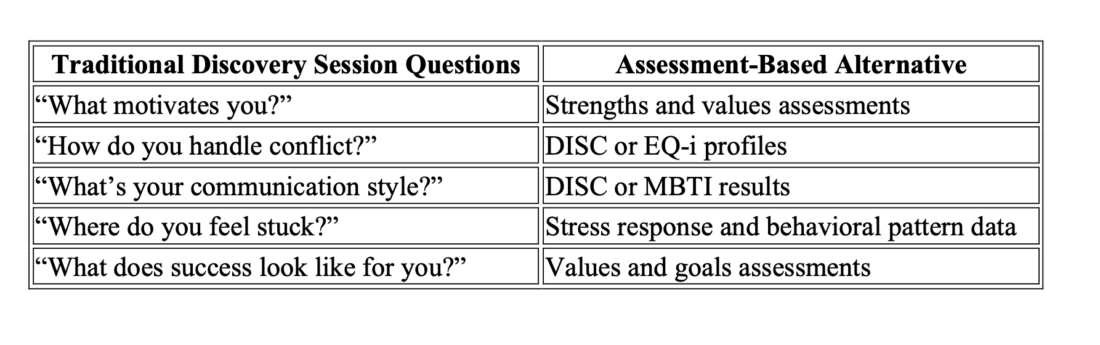
This doesn’t eliminate discovery conversations altogether; it simply means your sessions become deeper, more focused, and more strategic.
Instead of spending time collecting basic information, you spend time interpreting meaningful insights.
How to Build a Discovery Assessment with Agolix
Creating a discovery assessment doesn’t have to be complicated. In fact, the best assessments often come from the same questions you already ask during onboarding; they’re just organized into a repeatable, scalable system.
Agolix allows coaches and consultants to create customized assessments tailored to their onboarding and coaching processes.
Rather than forcing clients through generic templates, you can design assessments that reflect your unique methodology and client experience.
1. Define Your Discovery Goals
Before building questions, start by thinking about what you actually need to learn about a client in order to coach them effectively.
Some professionals want to understand communication styles and leadership tendencies. Others may care more about emotional intelligence, readiness for change, or business bottlenecks.
For example, an executive coach working with founders may prioritize uncovering stress triggers and delegation habits, while a career coach may focus more heavily on values, motivations, and confidence patterns.
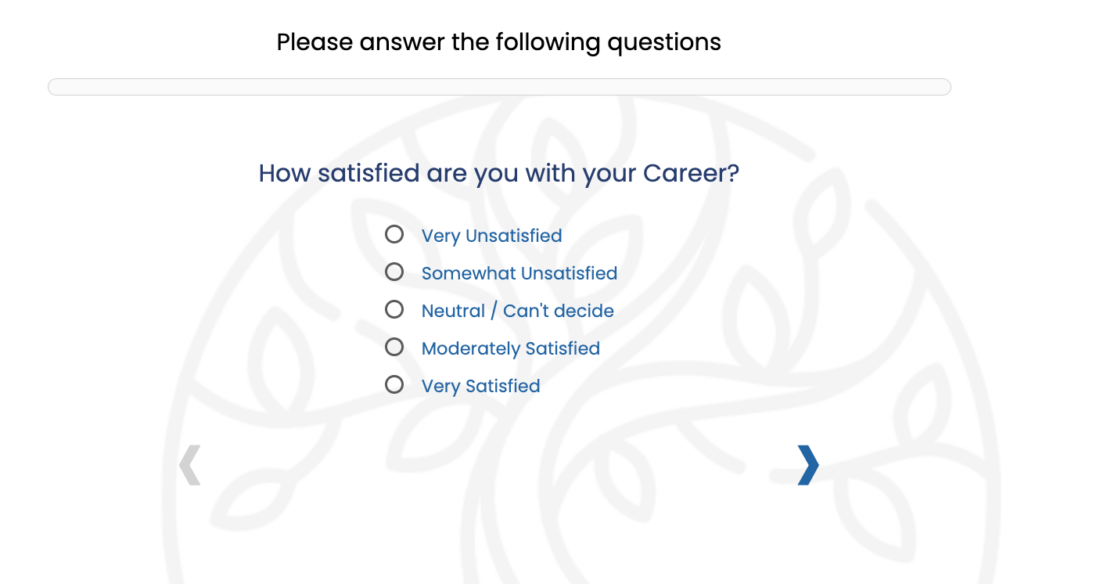
The clearer your goals, the more useful your assessment becomes.
2. Choose Your Question Types
Not every insight comes from a simple multiple-choice question. Some coaching discoveries require measurable data, while others benefit from open reflection and storytelling.
That’s why Agolix supports multiple response formats, allowing you to combine structure with flexibility.
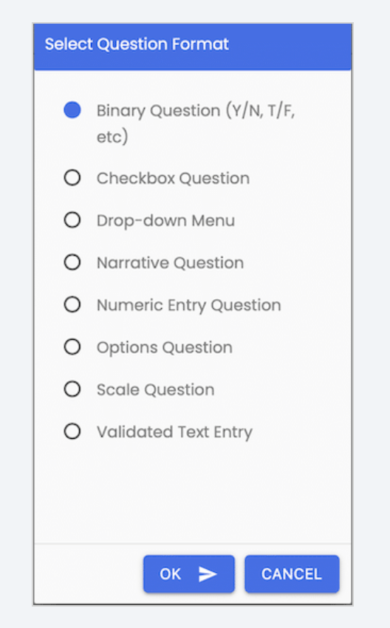
You can include:
- Multiple choice questions
- Rating scales
- Open-ended responses
- Behavioral indicators
- Scenario-based questions
This combination allows you to gather both quantitative and qualitative insights.
3. Organize Questions Into Categories
Once your questions are written, organizing them into categories makes the assessment easier to navigate for clients, and easier to interpret for coaches.
Instead of presenting one long list of disconnected questions, Agolix allows you to group topics into meaningful sections.
Example categories might include:
- Communication style
- Leadership tendencies
- Personal goals
- Emotional intelligence
- Growth readiness
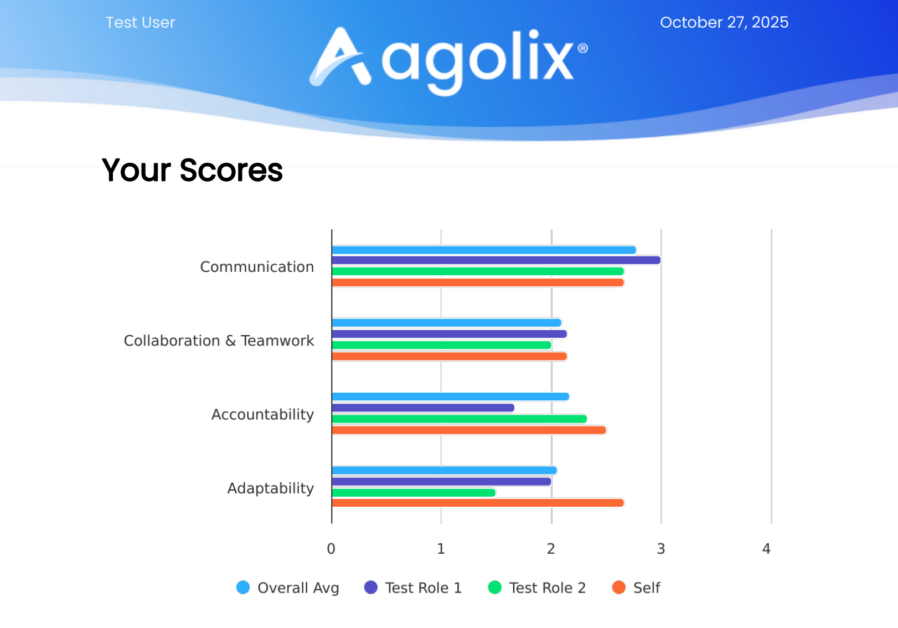
For example, a business coach might create one section focused entirely on decision-making and another focused on stress management. When the assessment results come in, those categories help quickly highlight strengths, friction points, and coaching priorities.
This structure also creates cleaner reporting dashboards, making it easier to spot trends at a glance rather than sorting through scattered responses manually.
4. Customize Results and Feedback
One of the most valuable parts of the Agolix platform is what happens after the assessment is completed.
Instead of simply collecting answers, you can create automated scoring systems and personalized feedback that immediately deliver value to the client.
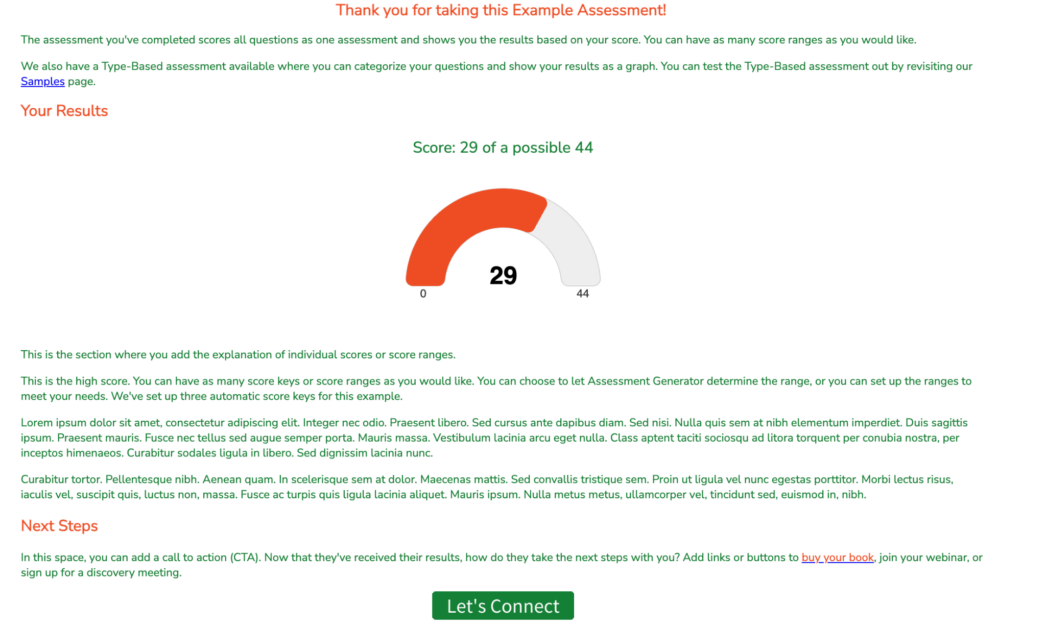
For example, if a client scores highly in adaptability but low in communication confidence, Agolix can automatically generate tailored feedback explaining how those patterns may show up in leadership situations.
That means the client walks away with useful self-awareness right away, while the coach receives organized insights they can use to guide future sessions.
This turns the assessment into more than just an intake form — it becomes the beginning of the coaching experience itself.
5. Brand the Experience
First impressions matter, especially during onboarding.
A generic-looking assessment can feel disconnected from the rest of your coaching process, while a branded experience reinforces professionalism and trust.
With Agolix, you can customize the assessment experience by adding:
- Your logo
- Brand colors
- Personalized messaging
- Custom result pages
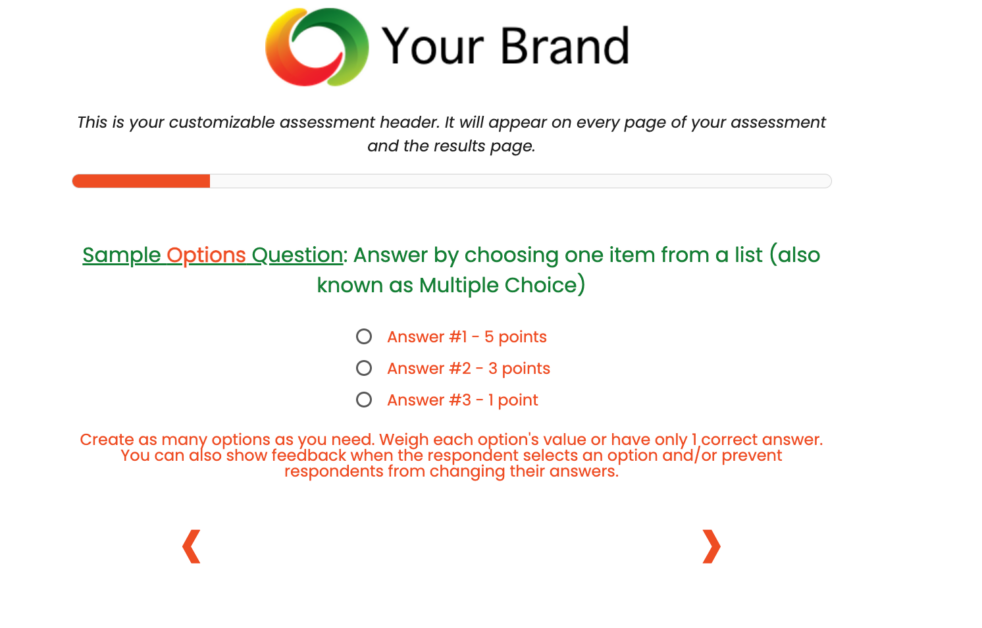
For example, a leadership consultant could create a fully branded “Executive Readiness Assessment” that mirrors the look and feel of their website and coaching materials. Clients experience the assessment as a seamless extension of the consultant’s brand rather than a third-party survey tool.
Small details like this help create a more polished and intentional client journey.
6. Share and Automate
Once your discovery assessment is built, the real magic happens when you automate it.
Instead of manually scheduling onboarding calls and sending repetitive emails, Agolix allows you to integrate assessments directly into your client workflow.
For example:
- Send automatically after booking
- Include in welcome emails
- Add to CRM automation flows
- Trigger before strategy sessions
This turns your best discovery session questions into a scalable system.
More importantly, Agolix is designed for coaches and consultants, not developers. You don’t need technical expertise to build sophisticated assessment experiences.
How to Run a Discovery Process Using Assessments
Switching to an assessment-first onboarding process is often much simpler than coaches expect. In many cases, it’s not about replacing conversations altogether; it’s about making those conversations more focused and productive.
Here’s what that process can look like in practice.
Step 1: Send the Assessment Before the First Session
The easiest way to streamline discovery sessions is to move information gathering earlier in the process.
Instead of waiting until the first meeting to ask foundational questions, send the assessment as part of onboarding.
For example, a consultant might include the assessment link directly inside their welcome email with a short note like: “Please complete this before our first strategy session so I can better understand your goals and working style.”
This immediately shifts the first session from introductory small talk to meaningful discussion.
Step 2: Review Results and Identify Patterns
Once the client completes the assessment, you can review the results before the first conversation takes place.
Rather than looking for isolated answers, focus on recurring themes and behavioral patterns such as:
- Communication tendencies
- Emotional patterns
- Potential resistance points
- Leadership strengths
- Stress indicators
For example, if a client consistently scores high in ambition but low in delegation confidence, that may signal future burnout risks or team-management challenges.
Going into the session with this context allows a coach to ask sharper, more relevant questions right away.
Step 3: Use the First Session to Validate Insights
Instead of starting from scratch, use the session to confirm and explore assessment findings.
Rather than starting with broad discovery session questions like “tell me about your biggest challenges,” you can immediately explore patterns surfaced in the assessment.
For example: “Your results suggest you tend to avoid direct conflict under stress. Does that resonate with your experience?”
That kind of question creates a much deeper conversation, because it’s grounded in specific behavioral data rather than surface-level discussion.
Clients also tend to feel more understood quickly, which helps strengthen trust and engagement early in the relationship.
Step 4: Build Coaching Around Data
Once the assessment insights are validated, they can shape the entire coaching strategy moving forward.
Assessment data can help guide:
- Coaching plans
- Accountability systems
- Communication methods
- Leadership development strategies
For instance, if a client shows strong strategic thinking but low emotional regulation under pressure, the coach may prioritize resilience-building and communication habits before tackling advanced leadership development.
This creates a more personalized coaching experience from the very beginning instead of relying on trial and error over multiple sessions.
Step 5: Revisit Assessments Over Time
One of the biggest advantages of assessments is that they remain useful long after onboarding ends. The results become an ongoing reference point throughout the client relationship.
For example, coaches can revisit assessment data when:
- Progress stalls
- Goals shift
- Team dynamics change
- New challenges emerge
A leadership coach working with a fast-growing startup founder might revisit earlier assessment results six months later—after the founder transitions from managing a small team to leading an entire department.
Patterns that once seemed minor may suddenly become highly relevant in a new context. This continuity helps create a more intentional and adaptive coaching process over time.
When You Might Still Need a Discovery Session
Assessments are incredibly powerful, but they aren’t perfect substitutes for every situation. There are still moments when live discovery conversations play an essential role.
The goal isn’t to eliminate human connection, but to reduce unnecessary friction and improve the quality of those conversations.
Complex Team or Organizational Dynamics
In larger organizations, challenges often involve multiple stakeholders, shifting priorities, and interpersonal dynamics that assessments alone may not fully capture.
For example, a consultant working with an executive leadership team may still need live discovery meetings to understand political tensions, communication breakdowns, or organizational culture issues.
Assessments can provide valuable insight, but nuanced conversations remain important.
Trust-Building Situations
Some clients simply need face-to-face interaction before they feel comfortable opening up.
A new executive coaching client, for example, may initially hesitate to share personal leadership struggles through an online assessment alone. In those cases, a live discovery session helps establish psychological safety and trust first.
Once that relationship is built, assessments become even more effective because clients answer more honestly and thoughtfully.
Highly Specialized Contexts
Certain industries or consulting engagements require contextual understanding that standardized assessments may not fully address.
For example, a consultant working in healthcare compliance or enterprise cybersecurity may need detailed operational conversations that go beyond personality and behavioral data.
Assessments can still support the process, but industry-specific discovery discussions remain essential.
The key takeaway is this: The most effective onboarding processes usually combine both approaches: assessments and focused discovery conversations.
That combination gives coaches and consultants the best of both worlds — structured insights and meaningful human connection.
Skip Discovery Sessions With Agolix AI-Powered Assessments
Traditional discovery sessions consume time, rely heavily on subjective self-reporting, and often delay meaningful progress.
Assessments change that.
They provide structured, repeatable insights that help coaches and consultants:
- Understand clients faster
- Improve onboarding
- Personalize coaching
- Reduce repetitive sessions
- Scale their practice more efficiently
Instead of spending three sessions gathering baseline information, you can begin with clarity from day one.
Three discovery sessions’ worth of insight, before you ever get on a call. That’s what a well-built assessment makes possible — and with Agolix, building one takes minutes, not months. Try it free and see what you’ve been spending those first sessions looking for.